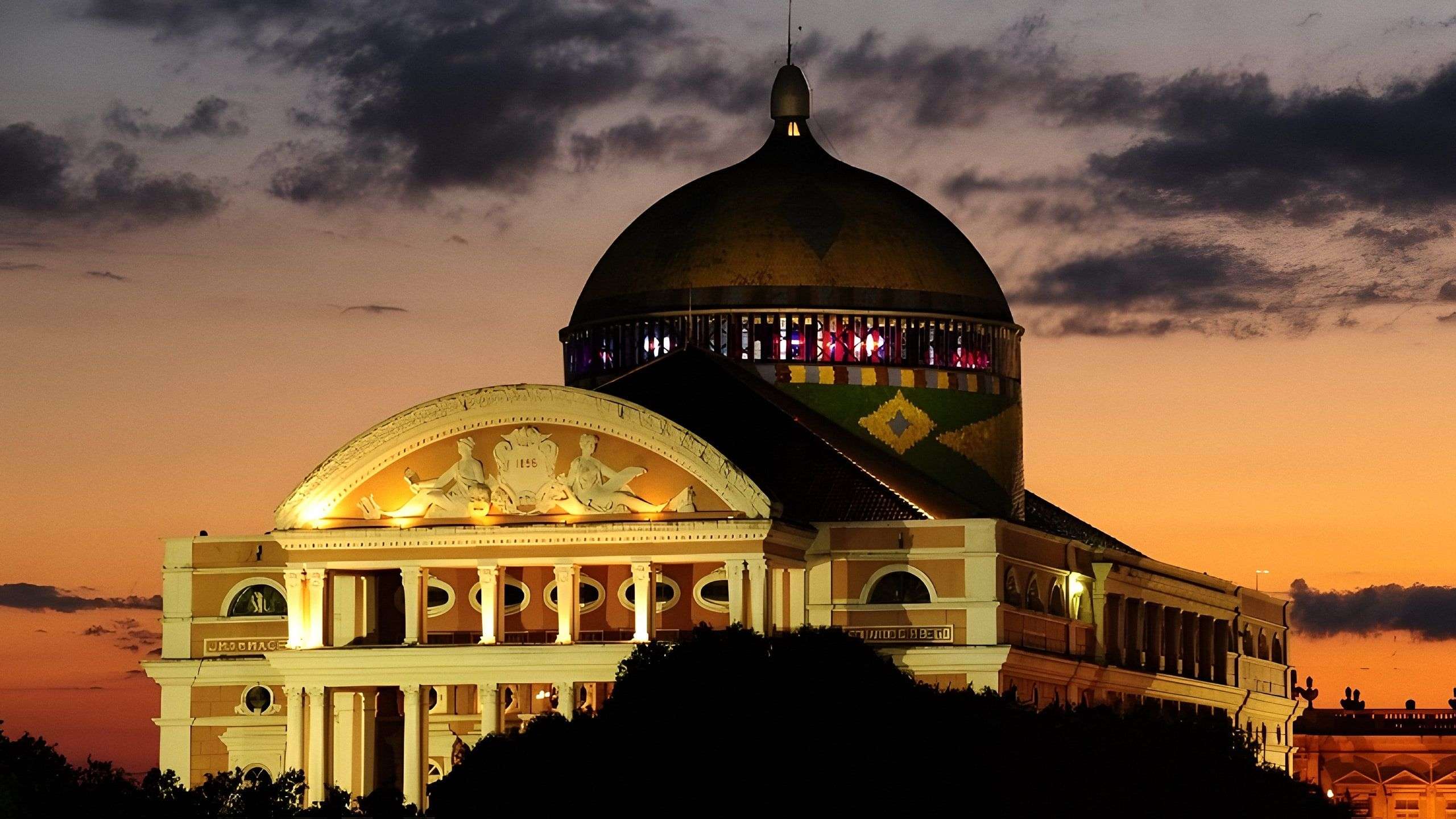
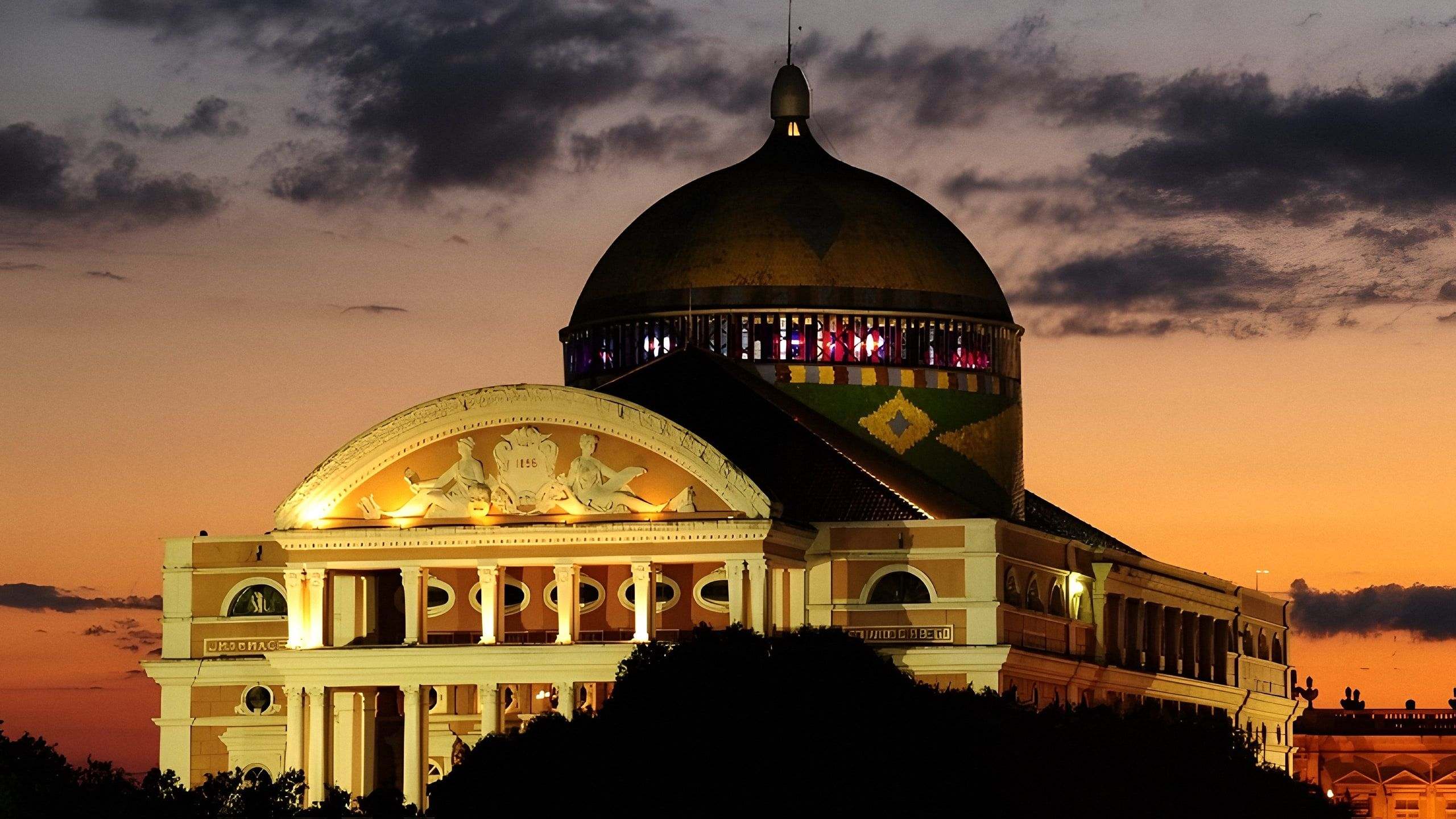






The Amazon Theatre, or Teatro Amazonas, opened in 1896, when Manaus was one of the richest cities in Brazil. The money came from rubber: latex tapped from the forest’s rubber trees supplied factories in Europe and the United States, and the profits came back as palaces, trams, a port and an opera house in the middle of the jungle.
More than a century later it is still standing, still in use, and it is the building that shows up most in visitors’ photos of Manaus.
An opera house built with materials from far away
Much of what you see at the Amazon Theatre crossed the ocean. The marble came from Italy. The glazed ceramic tiles on the dome came from France. Ironwork, chandeliers and mirrors arrived by ship up the Amazon, at a time when no road linked Manaus to the rest of the country.
The wood was the exception. It comes from the region and appears in the floors and in details inside.
What to look for outside
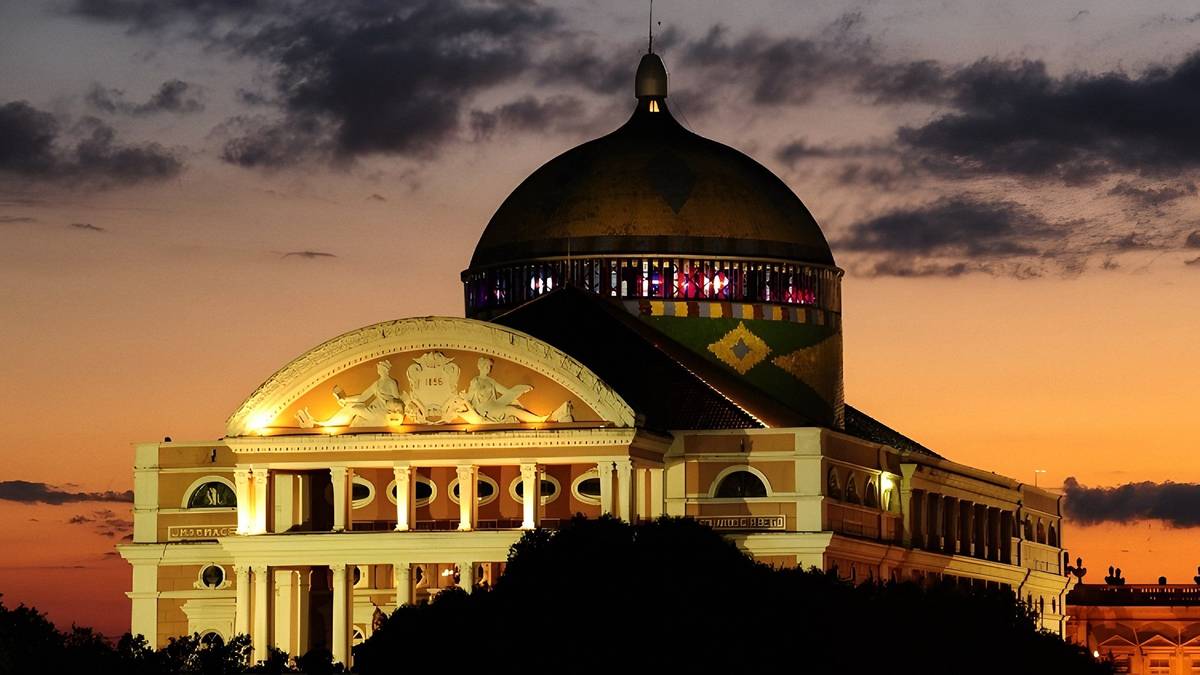
The dome. Thousands of ceramic tiles in green, yellow and blue, the colours of the flag. In the late afternoon, when the sun hits from the side, the colours get stronger.
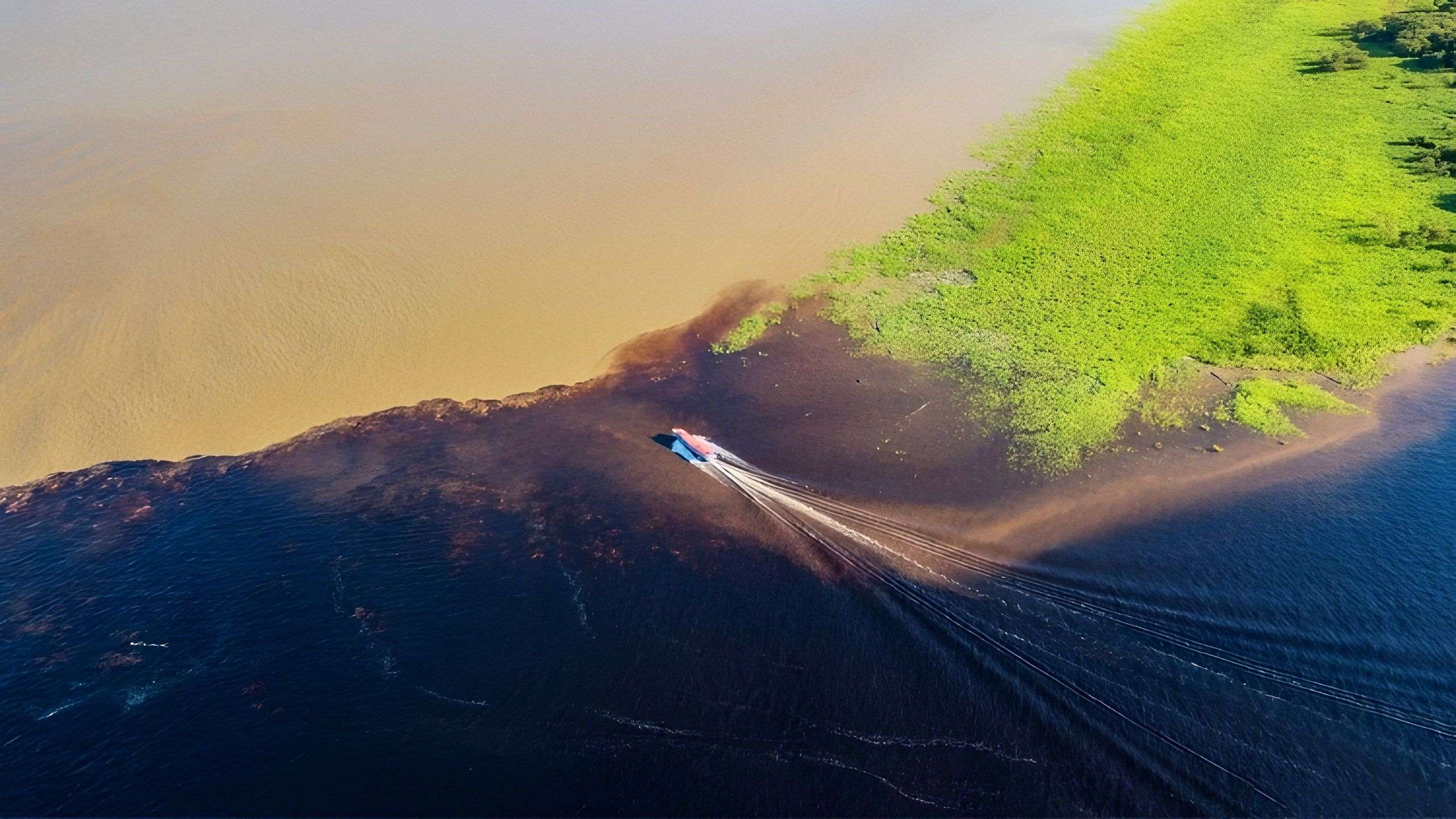
The pavement. Largo de São Sebastião is paved with black and white Portuguese stones laid in waves. The waves represent the Meeting of the Waters, the dark Rio Negro beside the pale Solimões.
The square. São Sebastião Church, from 1859, and the Monument to the Opening of the Ports, from 1900, stand in the same square. Together they are the best place downtown to picture Manaus during the rubber boom.
What you see inside
When guided visits are open, they go through the auditorium and the noble hall. In the auditorium, the stage curtain is a painting by Crispim do Amaral showing the Meeting of the Waters. In the noble hall, the painted ceiling and the floor of regional woods are the details that catch the eye.
Inside visits have their own times and tickets, set by the theatre, and may not happen on rehearsal or event days. That is why we don’t promise the inside visit before confirming the date.
How to visit on the city tour
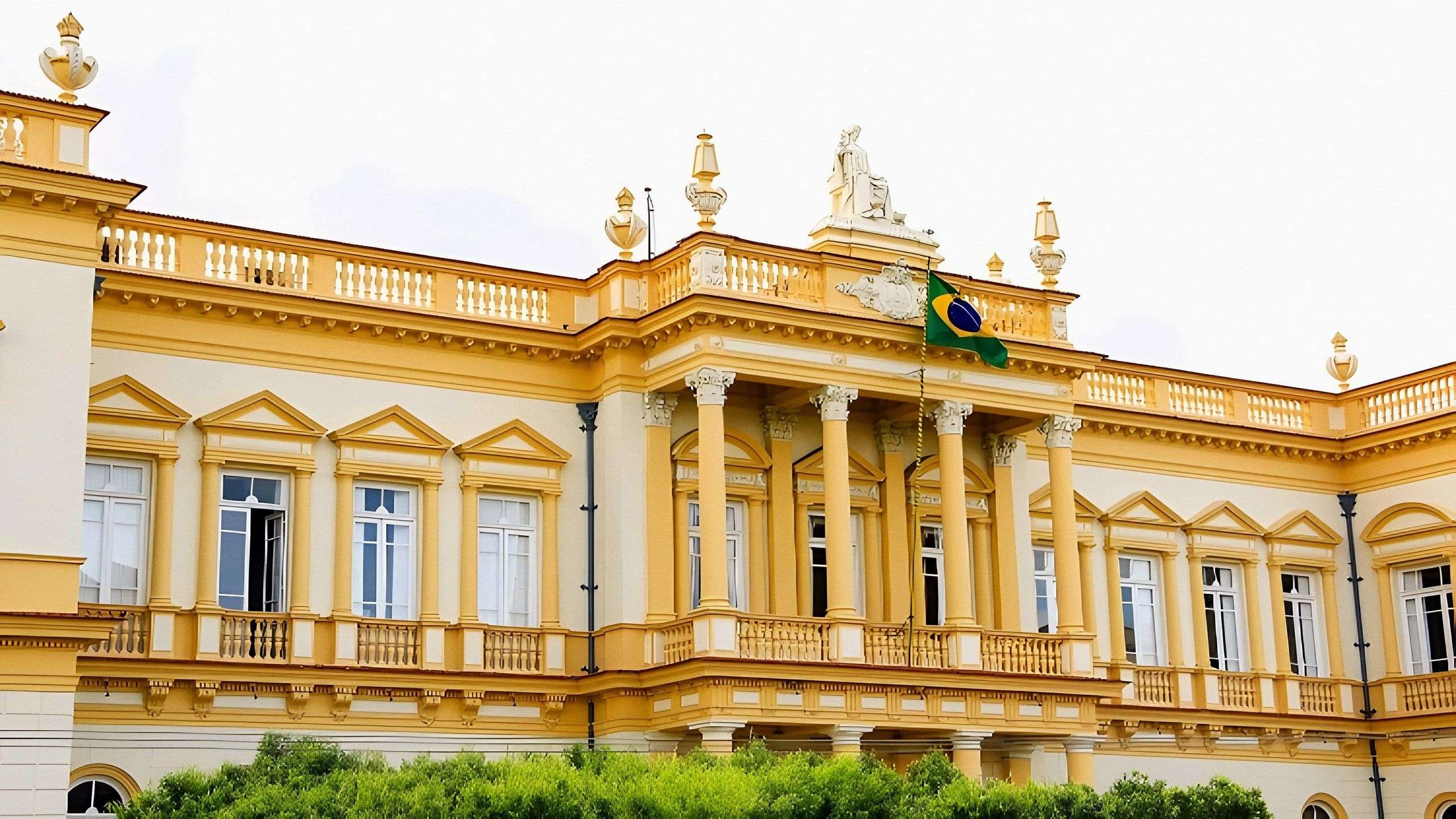
The Amazon Theatre is the first stop on our historic city tour. It is half a day by car, with a guide, starting in the morning or the afternoon. The route continues to São Sebastião Church, the Palace of Justice, the Rio Negro Palace, the Banana Market, the Fish Market and the Adolpho Lisboa Market, the 1883 municipal market by the river.
If you want the whole day, choose the historic and science city tour, from 8:00 to 17:00, which adds the Museum of the Amazon, entry included, and late afternoon at Ponta Negra.
Some stops may be exterior only, depending on each place’s opening hours.
A film connection
The theatre appears at the very start of Fitzcarraldo, Werner Herzog’s 1982 film about a man obsessed with building an opera house in the jungle. Plenty of people come to Manaus because of that story. It is worth watching before your trip.
Tips
- For photos without crowds, go early or late in the afternoon.
- If you want to see a performance, check the theatre’s programme before you fix your travel dates.
- The historic centre is close to the port. You can do the city tour one day and the boat tour the next, leaving from the same neighbourhood.
Questions we often get
Does the city tour go inside the Amazon Theatre?
It depends on the theatre's opening hours that day. When inside visits are not available, the stop is outside, in Largo de São Sebastião. Ask us on WhatsApp when you book and we will confirm for your date.
How long is the city tour?
The historic route takes half a day, with a morning or afternoon start. The full-day route runs from 8:00 to 17:00 and adds the Museum of the Amazon and Ponta Negra.
Can I see a performance?
Yes. The theatre has a programme throughout the year, with concerts, dance and opera, plus the Amazonas Opera Festival. Dates and tickets are handled by the theatre itself.
Encontro das Águas Turismo team. Published 18 November 2026.