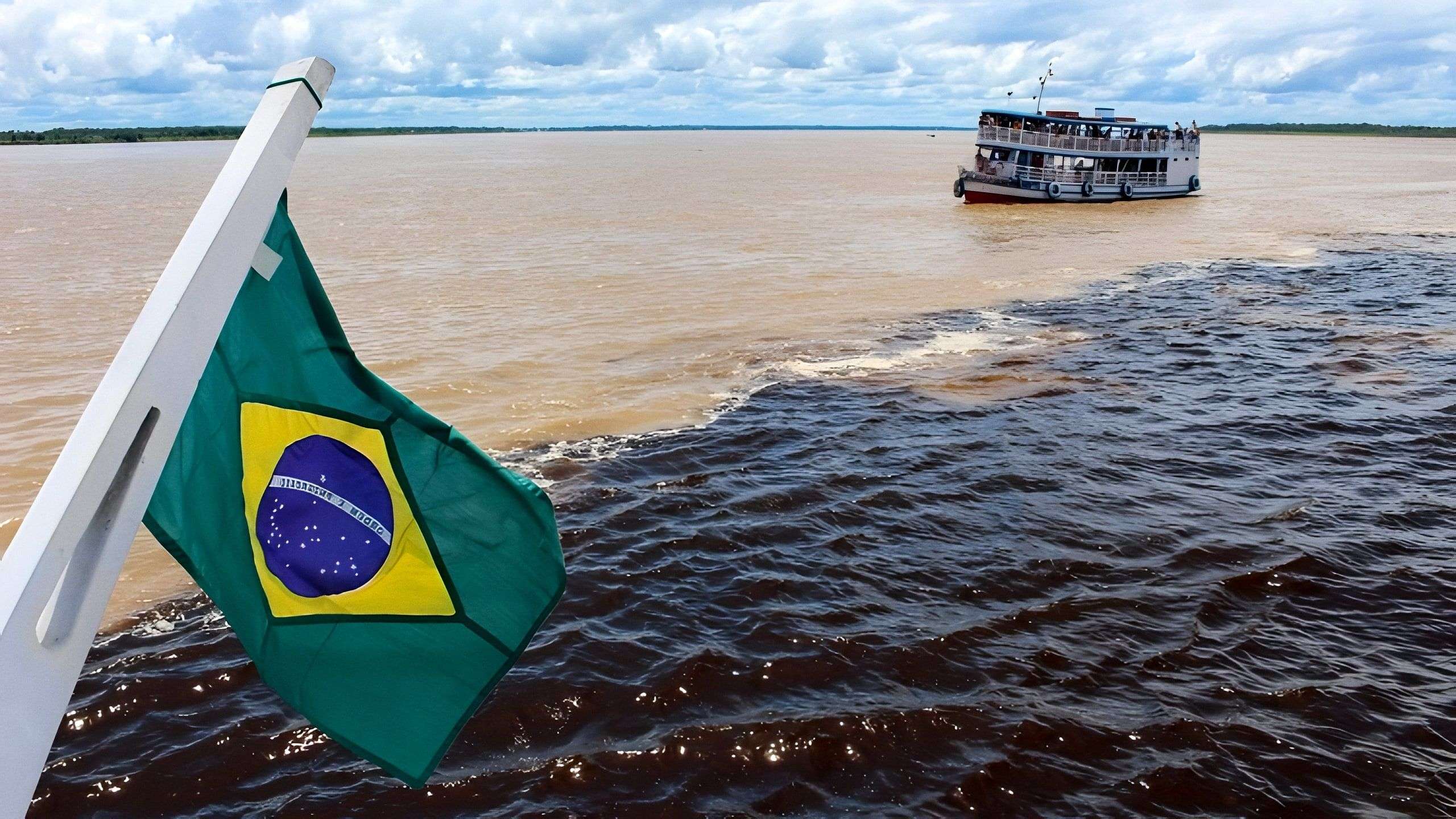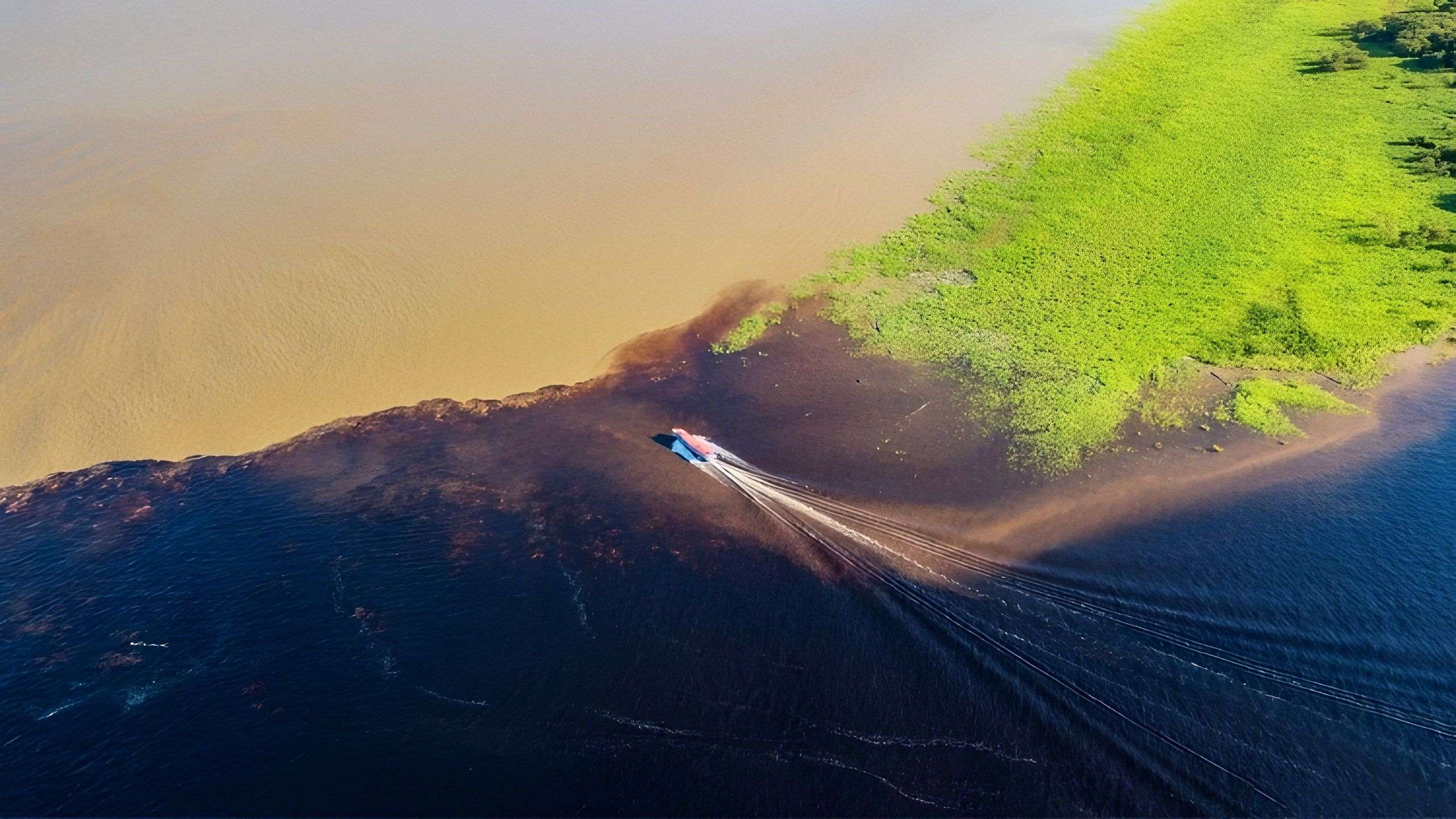
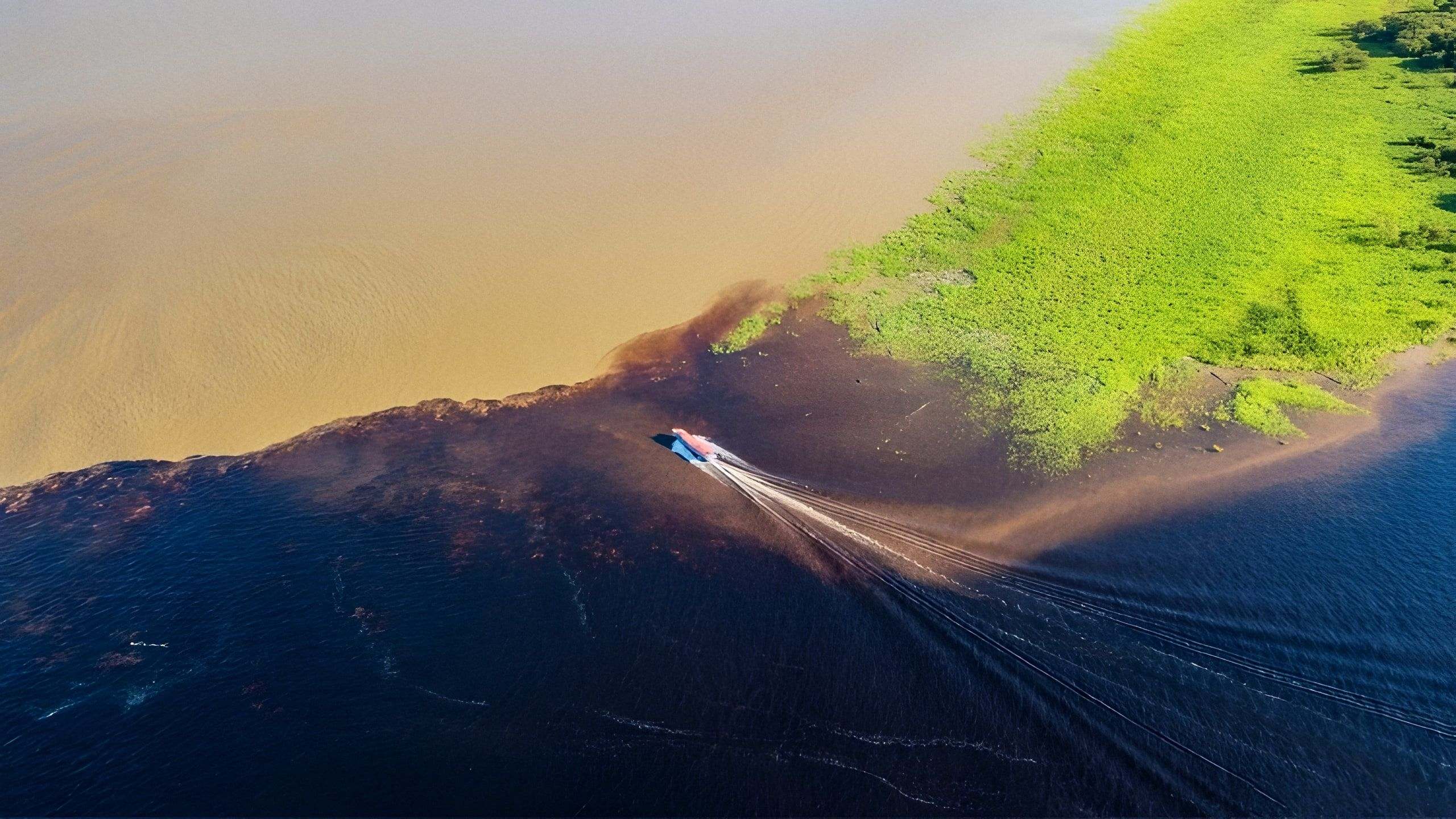






People who see the Meeting of the Waters from above for the first time often think it is a photo edit. On one side, dark water the colour of strong tea. On the other, beige water the colour of milky coffee. And between them, a line that changes shape with the current but does not disappear.
This is where the Rio Negro meets the Solimões River, right in front of Manaus. From here downstream, the combined waters form the stretch that in Brazil is called the Amazon River. Locals call the spot the Encontro das Águas.
Where each colour comes from
The Rio Negro flows through lowlands and flooded forest. The water spends months over decomposing leaves and branches and becomes rich in dissolved organic matter, which gives it its dark colour and makes it acidic. The acidity also helps explain why there are fewer mosquitoes along the Negro.
The Solimões comes down from the Andes carrying clay and sand. That sediment is what makes it muddy and heavier.
Why the two rivers don’t mix
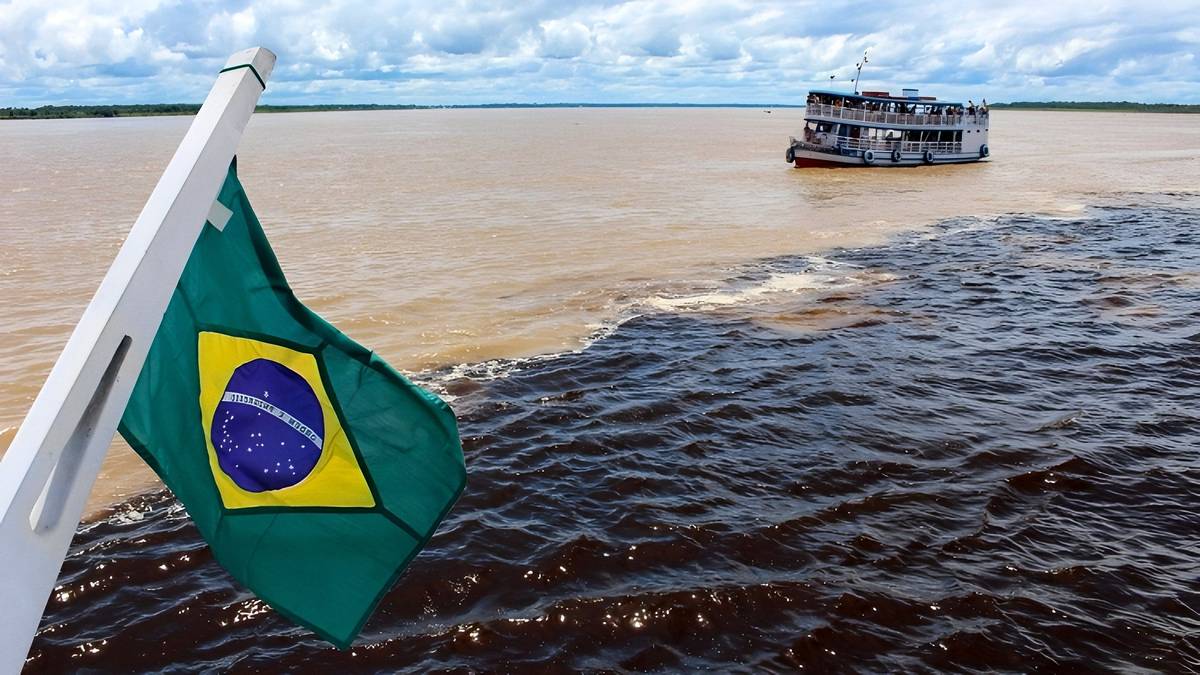
It is not that they never mix. They take their time. For a few kilometres, the two waters run side by side because they differ in three ways:
| Rio Negro | Solimões | |
|---|---|---|
| Colour | Dark, like tea | Muddy, light clay |
| Temperature | Warmer | Cooler |
| Speed | Slower | Faster |
| Density | Lighter | Heavier, because of the sediment |
With different temperatures, speeds and weights, one water slides along the other instead of blending at once. Little by little, the current and the eddies mix everything, and further downstream the river becomes a single colour.
The temperature difference is a few degrees, enough to feel with your hand.
Where it is and how to get there
The meeting point is east of central Manaus, near the Ceasa port, on the opposite side of the city from Ponta Negra. The only way to see the line up close is by boat.
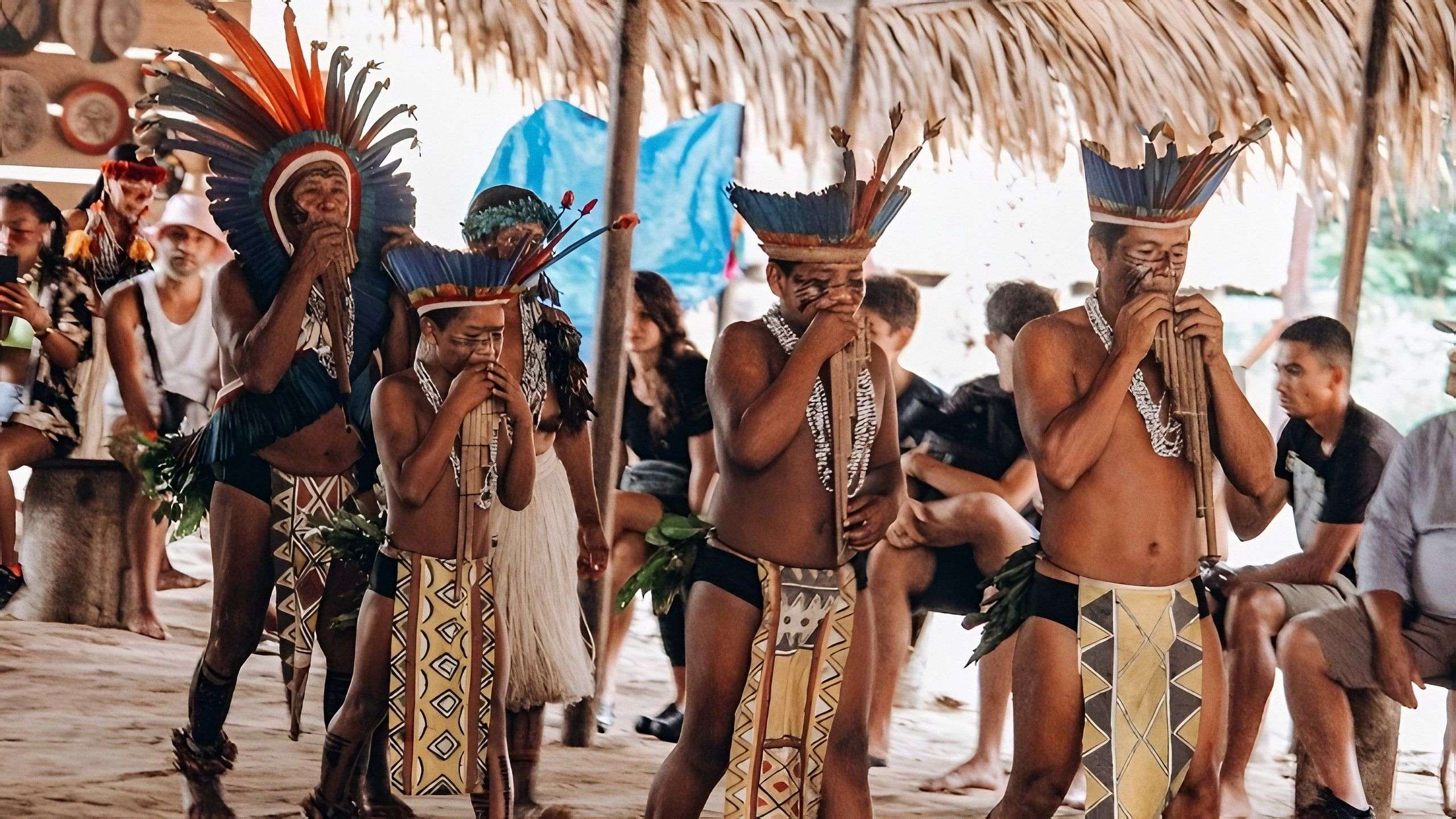
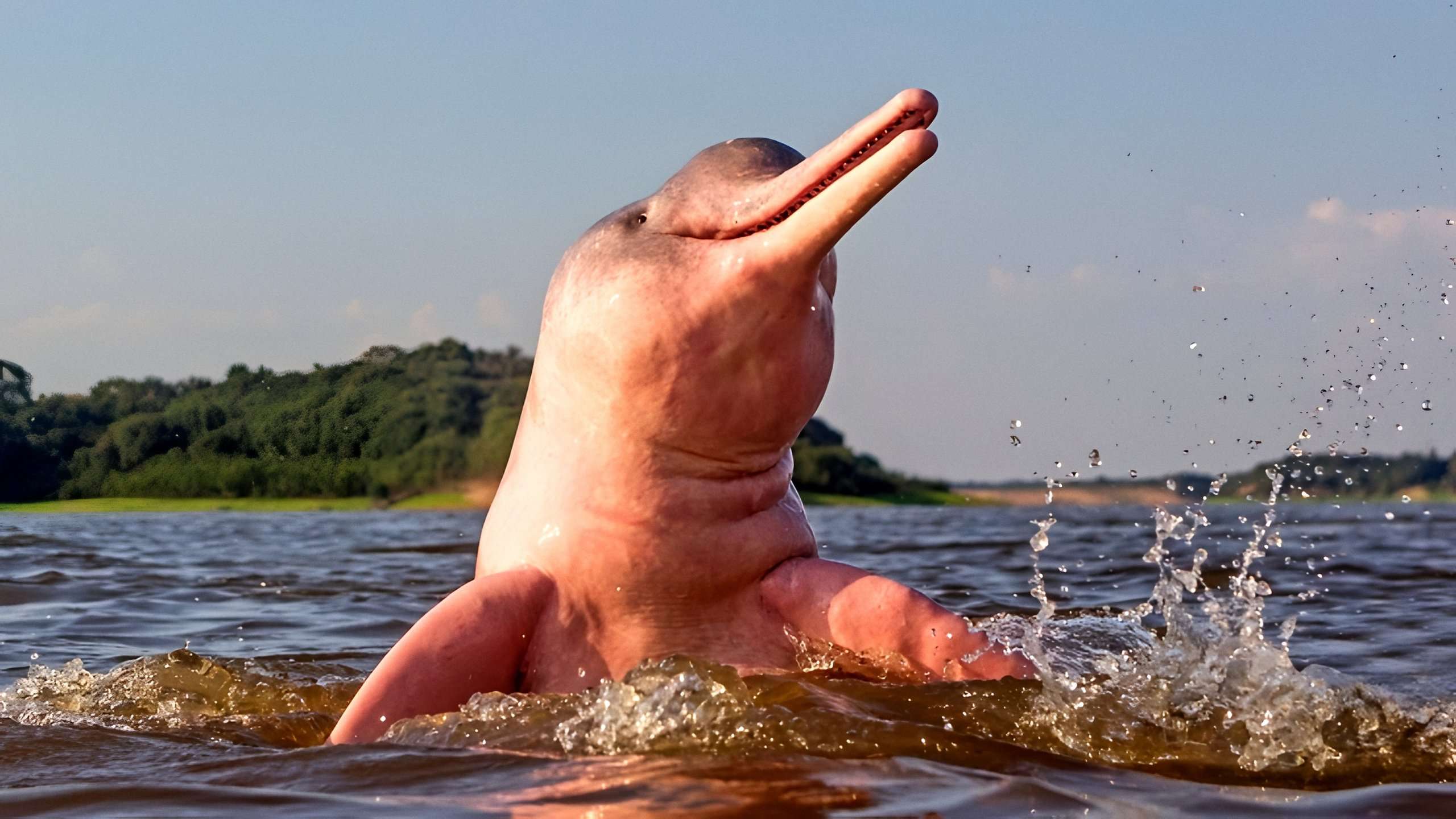
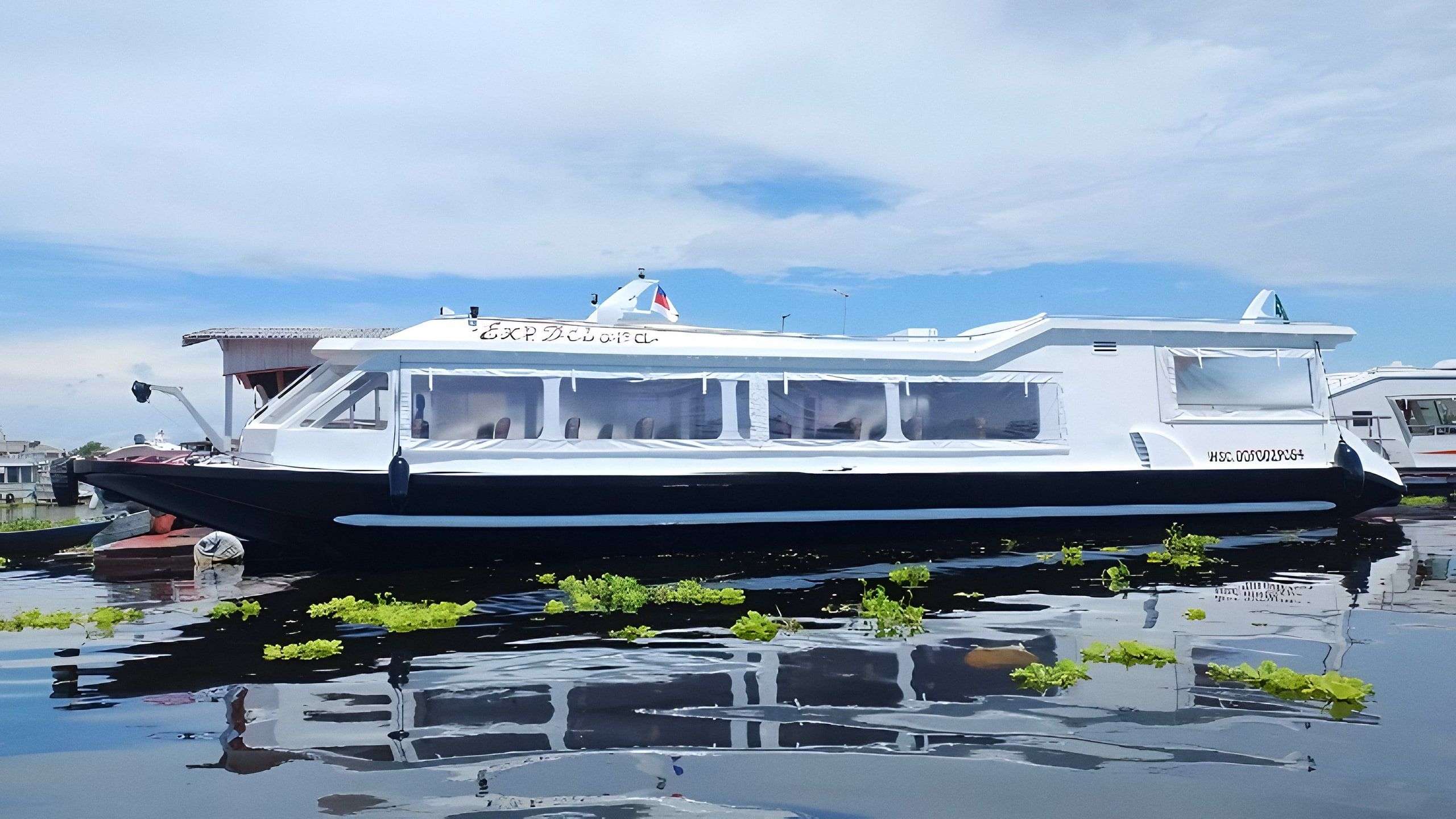
On our boat tour, you board at Mirante Lúcia Almeida, in the city centre. The boat heads down the Rio Negro and the Meeting of the Waters is the first stop, with time for photos. The day continues at the pink dolphin platform, pirarucu fishing, the Indigenous village and lunch at a floating restaurant.
For groups, families or anyone who wants to choose the time, there is the private boat tour, which runs every day.
Best time to see it
The meeting exists all year. What changes is the landscape around it:
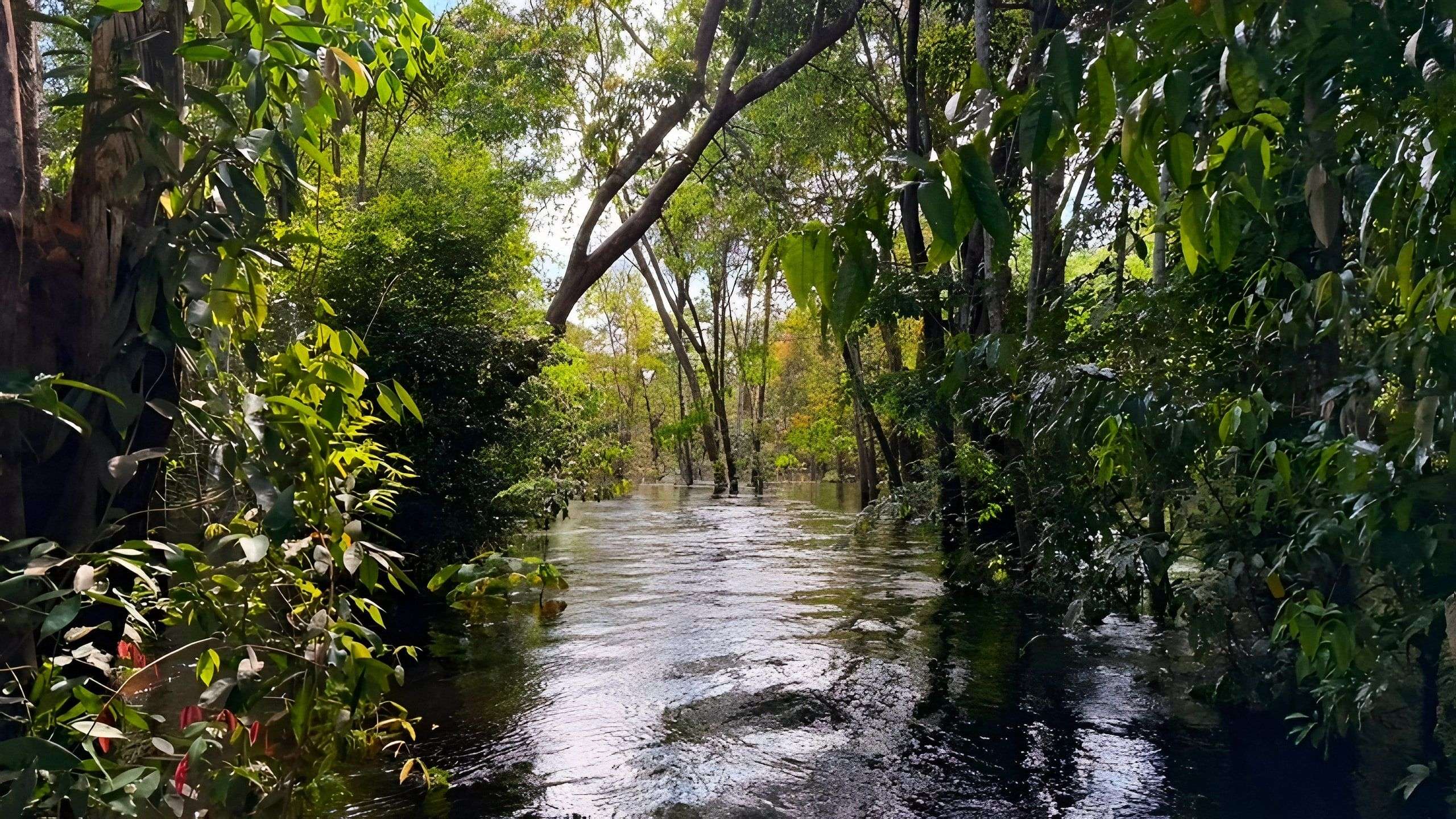
- At high water (roughly December to July), the river rises into the forest and the boat gets closer to the trees during the rest of the tour.
- At low water (August to November), the banks reappear and sandy beaches form along the Rio Negro.
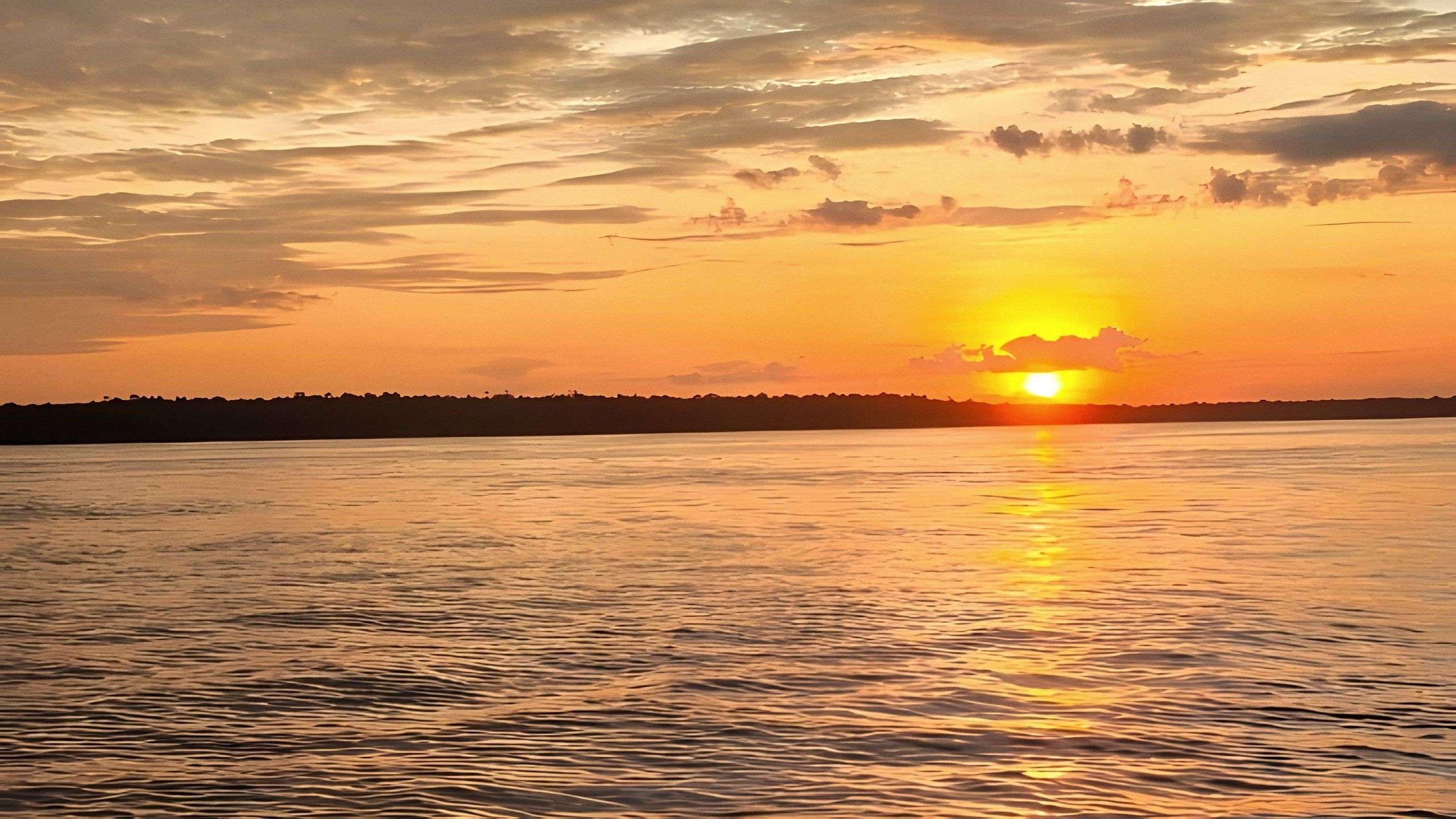
If you can choose, go in the morning. The low light helps you see the line between the waters, and the tour is already timed for it. More in our article on the best time to visit the Amazon.
Photo tips
- Step outside the cabin when the boat stops. Through the window, photos lose colour.
- Shoot the line diagonally, with the bow in one corner. It gives a sense of scale.
- Hold your phone horizontally to show both colours side by side.
- Wear sunscreen even when it is cloudy. On the river, the sun reflects off the water.
Questions we often get
Why don't the waters mix?
The Rio Negro is warmer, slower and lighter. The Solimões is cooler, faster and carries a lot of sediment, which makes it denser. Because of these differences, the waters run side by side for a few kilometres before they blend.
How long does it take to get to the Meeting of the Waters?
By boat from central Manaus the trip is short. On the shared tour, it is one of the first stops of the morning.
Can I see the Meeting of the Waters without a boat tour?
To see the line between the two waters up close, you need a boat. The meeting point is in the middle of the river, away from the city streets.
Is the tour suitable for children and older travellers?
Yes. The stretch to the meeting point is done seated inside the boat. On the shared tour, children pay less and those up to age 4 go free.
Encontro das Águas Turismo team. Published 18 November 2026.